

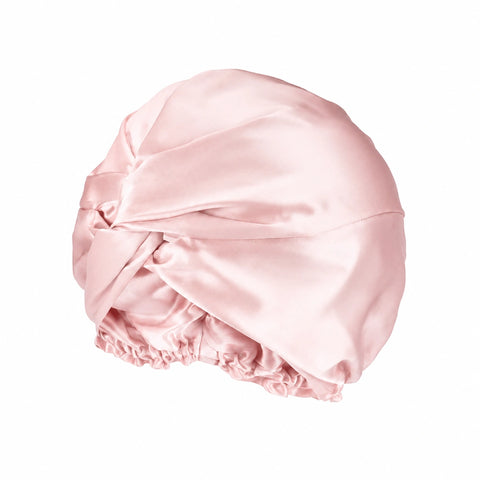


Pillow protector: what is it for and why combine it with silk
The pillow protector is the piece of bedding nobody sees — and that almost everyone forgets. Yet it is what determines whether your pillow stays clean and whether your main pillowcase lasts. Under a silk pillowcase, it is especially valuable: it lets you wash less often, which preserves the fibre. Here is everything you need to know.
- Role: a barrier between the pillow and sweat, night-time skincare, dust mites and bacteria.
- Benefit: fewer washes for your main pillowcase — especially if it is silk, which is sensitive to frequent washing.
- Ideal material: organic cotton or Tencel under a silk pillowcase — never synthetics, which stop the silk from breathing.
- Frequency: pillow protector every week, silk pillowcase every 2 to 3 weeks.

What exactly is a pillow protector?
A pillow protector — also called a pillow liner or inner pillowcase — is a fabric cover placed directly on the pillow, underneath the main pillowcase. It is not meant to be seen: its role is purely functional, creating a barrier between the filling and everything your body releases during the night.
What many people don't realise: a pillowcase alone does not protect the pillow. It dresses it and touches your skin, but it is permeable. Sweat, sebum and skincare residue gradually pass through it to reach the filling. Without a pillow protector, the pillow yellows, gets heavier and becomes a breeding ground for dust mites.
Breathable pillow protector vs waterproof pillow protector
A classic pillow protector (cotton, Tencel, bamboo) is breathable — it absorbs moisture without blocking airflow. A waterproof pillow protector contains a membrane that blocks liquids: suitable for children or very heavy sweating, but less recommended under a silk pillowcase, as it reduces the very breathability that silk is meant to promote.
The 4 essential roles of a pillow protector
- Night-time hygiene barrier: the body releases moisture every night through sweat and breathing. The pillow protector absorbs it before it reaches the pillow, limiting the conditions dust mites thrive in.
- Longer lifespan: by catching sweat, sebum and cosmetic residue, it prevents these substances from degrading the main fabric — particularly useful for a silk pillowcase.
- Temperature regulation: organic cotton and Tencel are breathable and absorb excess moisture, keeping the pillow cool and dry, alongside silk's natural thermoregulation.
- Dust mite protection: washed every week at 60°C, the pillow protector removes allergens before they get into the filling — helpful for people with allergies or asthma.
Why a pillow protector is essential under a silk pillowcase
Mulberry silk is the most beneficial bedding material for skin and hair — but also one of the most sensitive to frequent washing. Every machine cycle, even at 30°C, puts strain on the fibre. The less you wash it, the longer it lasts.
Without a pillow protector
Your silk pillowcase takes the sweat, cream residue and sebum directly. It then needs washing every week — around fifty cycles a year. The fibre wears faster, and the sheen and softness fade.
With a pillow protector
The pillow protector absorbs most of what the body releases at night. The silk pillowcase stays clean for longer — one wash every 2 to 3 weeks is enough. The result: far less mechanical wear, and a pillowcase that keeps its softness and sheen much longer.
Which material to choose for your pillow protector
| Material | Breathability | Absorption | Silk compatibility | Ideal for |
|---|---|---|---|---|
| Organic cotton | Excellent | Good | Perfect | Versatile everyday use |
| Tencel (eucalyptus) | Excellent | Very good | Perfect | Night sweats |
| Bamboo | Very good | Good | Very good | Antibacterial properties |
| Standard cotton | Good | Fair | Good | Tight budgets |
| Polyester / synthetic | Poor | Poor | Incompatible | Avoid under silk |
| Waterproof membrane | Reduced | Maximum | Limited | Very heavy sweating |
The perfect pair: breathable pillow protector + silk pillowcase
Layer 1, on the pillow: an organic cotton or Tencel pillow protector, washed every week at 40-60°C. It absorbs sweat, sebum and skincare residue, invisible beneath the top pillowcase.
Layer 2, against the skin: the mulberry silk pillowcase, washed only every 2 to 3 weeks. It reduces friction on skin and hair and keeps its sheen far longer.
4 mistakes to avoid
- Using a synthetic pillow protector under silk: polyester blocks moisture wicking, creates static electricity and cancels out some of silk's properties. Choose organic cotton, Tencel or bamboo.
- Choosing the wrong size: an oversized pillow protector creates creases that transfer to the pillowcase and form pressure points on the face. Choose the same size as your pillow.
- Not washing it often enough: an unwashed pillow protector builds up bacteria and dust mites. Wash it at least once a week, along with your sheets.
- Replacing it too rarely: even when well washed, it wears out and loses its absorbency after a few years. Replace it to keep the protection effective.
How to care for your pillow protector
- Wash weekly along with your sheets. Organic cotton and Tencel can handle 40 to 60°C — at 60°C, dust mites and bacteria are eliminated.
- Detergent without fabric softener: fabric softener reduces absorbency. Opt for a neutral detergent.
- Air dry or tumble dry on low: unlike silk, a cotton pillow protector can go in the tumble dryer. Make sure it is completely dry.
- Store somewhere dry, away from humidity, to prevent mould.
- Rotate two pillow protectors: one on the pillow, one clean in reserve, so you never put back a protector that is still damp.
Further reading
Frequently asked questions
It is not mandatory, but highly recommended. Silk is more sensitive to frequent washing than cotton. With a pillow protector, you go from washing weekly to washing every 2 to 3 weeks, which significantly reduces wear on the fibre.
No. The pillow protector sits under the silk pillowcase, between the pillow and the silk. It never touches your face. Silk remains the only surface in contact with your skin — all its properties are preserved.
The same size as your pillow, not your pillowcase. For a 60×60 pillow, choose a 60×60 pillow protector; for a 50×70, a 50×70 pillow protector. An oversized pillow protector creates creases that show through under the pillowcase.
The pillow protector: every week, with your sheets, at 40-60°C. The silk pillowcase: every 2 to 3 weeks, at 30°C on a delicate cycle. That is the whole point of the pairing — the pillow protector takes the daily strain so the silk is spared.
Technically yes, but it is not recommended: the waterproof membrane reduces the overall breathability, working against silk's properties. Keep it for very heavy sweating or for children; otherwise, choose organic cotton or Tencel.