

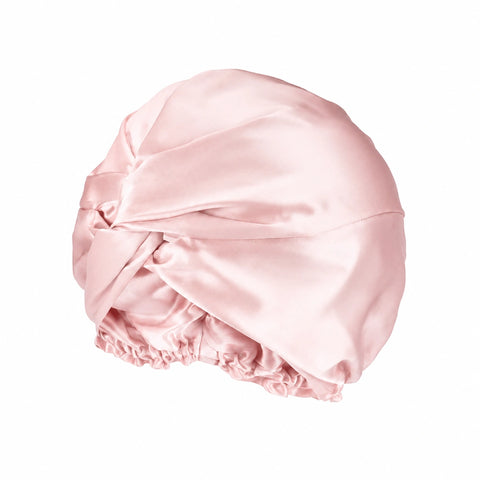


Pillowcase for sensitive skin: how to avoid irritation during the night
In short — Redness and tightness when you wake up? When your skin is sensitive, your pillowcase matters: it stays in contact with your face for several hours every night. A silk pillowcase, with its smooth, low-absorbency surface, reduces friction and better preserves surface hydration. It is a comfort choice, not a medical treatment.

Do you wake up with red patches on your cheeks and skin that feels tight first thing in the morning? These issues are common when you have sensitive skin, and few people think to look at their pillowcase. In direct contact with your face for seven to eight hours, it can either soothe or amplify skin reactions.
Why sensitive skin reacts more at night
Sensitive skin is, above all, a weakened skin barrier. It reacts more readily to factors that go unnoticed on less reactive skin:
- Repeated friction: your face naturally moves on the pillow during the night.
- Temperature changes: body heat can intensify the feeling of overheating.
- Moisture: light perspiration, sebum, skincare residue.
- Irritants: fragrances, laundry detergent residue, certain textile finishes.
At night, these factors add up. You go to bed with skin that feels fine and wake up with redness or tightness.
Key takeaway: skin regenerates mainly during sleep. If it is subjected to repeated aggressions during this phase, it recovers less well, hence the discomfort when you wake up.
The often underestimated role of your pillowcase
The pillowcase is the textile that stays in contact with your face the longest. Depending on its material, it can create several sources of discomfort: mechanical friction from a rough surface, absorption of skin moisture, heat retention, build-up of residue (sebum, skincare, dust). On reactive skin, these repeated micro-aggressions can keep irritation going.
| Material | Weak points for sensitive skin | Comfort |
|---|---|---|
| Synthetic (polyester, microfiber) | Less breathable, retains heat and moisture, often rougher | Low |
| Cotton | Absorbs a lot of moisture, can increase dryness; may stiffen after washing | Medium |
| Mulberry silk | Smooth, low-absorbency, breathable surface | High |
Cotton is not “bad”: good-quality, well-maintained cotton can work well. But for very reactive skin, a smoother surface is often better tolerated.
Why silk is particularly well suited
A smooth surface: less friction
Silk offers a very smooth surface that reduces micro-irritation caused by movement during the night, redness due to friction and the feeling of overheating. For sensitive skin, the principle is simple: less friction, less aggression. To understand the material, see why mulberry silk makes the difference.
Low absorbency: hydration better preserved
Silk absorbs little moisture compared with cotton. This helps preserve the skin's natural surface hydration, limit tightness when you wake up and prevent most of your evening skincare from being transferred to the fabric.
Often appreciated for its tolerance
Silk is frequently chosen by people with reactive, redness-prone or atopic skin (mild eczema), or skin weakened after certain treatments. It does not treat a skin condition, but it can reduce mechanical aggressions during the night. Also read: silk and rosacea.
Important notice: this article is for information only and does not replace medical advice. In case of eczema, rosacea, allergy or persistent irritation, consult a dermatologist. A silk pillowcase is a comfort choice, not a treatment.
Which types of sensitive skin?
- Reactive skin (prone to redness) — less friction can limit friction-related redness when you wake up.
- Dry skin that feels tight — a low-absorbency material preserves surface hydration.
- Skin prone to diffuse redness — the smooth surface often improves comfort and tolerance.
- Skin weakened after a dermatological treatment — a soft surface is generally more comfortable during the recovery phase.
Is a silk pillowcase essential?
No. It all depends on how sensitive your skin is. If your skin is slightly sensitive with no marked discomfort at night, good-quality, well-maintained cotton may be enough. However, if you have persistent redness when you wake up, frequent tightness or skin that is very reactive to friction, a silk pillowcase can be a sensible, comfort-focused option.
Practical tip: try it for two to three weeks. If you notice an improvement (less redness, less dryness when you wake up), you will have a clear answer. If not, the cause probably lies elsewhere (skincare, environment, stress).
Additional tips
- Change your pillowcase 1 to 2 times a week: residue builds up quickly.
- Gentle, fragrance-free detergent: limit irritants.
- Avoid fabric softeners: they leave a film on the fabric.
- Let your skincare absorb: wait 10 to 15 minutes after application.
- Cool bedroom: heat can amplify redness.
Want a softer surface for your skin at night?
Discover our silk pillowcases100% Grade 6A mulberry silk · OEKO-TEX® · Free shippingFrequently asked questions
A soft, smooth, breathable, low-absorbency pillowcase is generally better tolerated. Silk meets these criteria well, which explains its popularity among people with reactive skin.
Yes. Too much friction, a material that retains heat or a highly absorbent fabric can increase redness on sensitive skin.
No. It works as a complement to improve comfort at night, but it does not replace suitable skincare or a dermatologist's advice in case of persistent irritation.
Many people notice a change within two to three weeks. If nothing changes after a month, the irritation probably has another cause.
Yes, a certification such as OEKO-TEX Standard 100 helps limit the risk of unwanted substances, which is relevant for sensitive skin.