

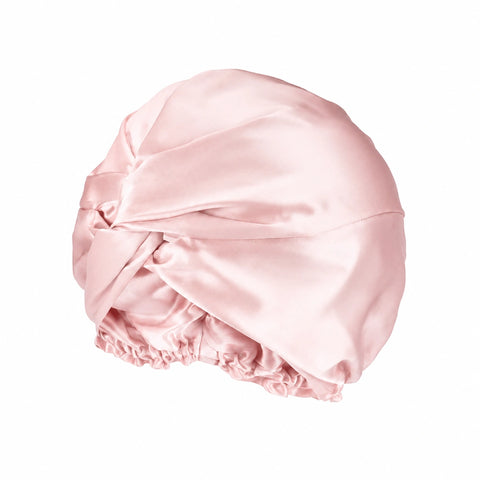


Anti-dust mite pillowcases: which fabric to choose
In France, 25% of the population suffers from a respiratory allergy, and house dust mites (Dermatophagoides pteronyssinus and D. farinae) are the leading cause according to ANSES (the French Agency for Food, Environmental and Occupational Health and Safety). Yet a pillow on its own combines several factors that favour their development: a constant temperature of 30 to 35 °C, moisture from night sweats (around 40 cl per night for the whole body), and a continuous supply of skin flakes.
A classic anti-dust mite cover encases the pillow, but it is the pillowcase -- the fabric in direct contact with your skin and airways -- that forms the first interface. Its fabric, weave density and absorbency shape the surface environment where dust mites feed and reproduce. This article focuses on that specific choice, without repeating what is already covered in our guide to hypoallergenic materials for bed linen.
Why dust mites thrive in some fabrics and not others
Dust mites need three conditions to multiply: relative humidity above 50%, a temperature between 20 and 30 °C, and a food supply (skin flakes, mould). The pillowcase fabric acts on the first two variables. A textile that absorbs and retains body moisture creates a favourable microclimate; a fabric that dries quickly and has a smooth surface limits this retention.
Moisture absorption and retention: the deciding factor
Moisture regain (ISO 6741 standard) measures a fibre's ability to absorb water from the surrounding air at 65% relative humidity and 20 °C. Cotton comes in at 7 to 8.5%, polyester at only 0.4%, and silk at around 10-11%. But this figure alone is misleading: what matters for dust mites is surface retention. Cotton absorbs and stores water in its hollow fibres, creating a lasting reservoir. Silk absorbs and then quickly releases moisture thanks to the smooth, compact structure of fibroin, without creating stagnant pockets. Polyester absorbs nothing but lets moisture stagnate on the surface between the fibres.
Weave density and allergen penetration
Medical anti-dust mite covers use a weave with a pore size below 10 microns (an adult dust mite measures 200 to 500 microns, but faecal allergens measure 10 to 40 microns). A standard pillowcase does not reach this density, whatever the fabric. However, a tight silk charmeuse weave (4/1 satin weave) or a cotton percale of more than 300 threads per inch limits the penetration of dust and skin flakes more than an open-knit jersey or a brushed flannel.
Electrostatic charge: the synthetic trap
Polyester and synthetic microfibres generate static electricity on contact with skin and hair. This charge attracts and holds dust particles on the surface -- including dust mite droppings (the main source of the Der p 1 allergen). The result: a synthetic fabric can look clean while concentrating allergens on the contact side. Silk and cotton are naturally antistatic.
Pillowcase fabrics compared against dust mites
The table below summarises the relevant properties of each fabric commonly used for pillowcases, assessed specifically from the angle of dust mite proliferation. Mulberry silk charmeuse combines the greatest number of properties unfavourable to dust mites among common textiles.
| Fabric | Moisture regain (ISO 6741) | Surface | Static charge | 60 °C wash | Hospitable to dust mites |
|---|---|---|---|---|---|
| Mulberry silk charmeuse (19-30 momme) | 10-11% | Very smooth (continuous fibroin) | None | No (30 °C max) | Low |
| Polyester satin | 0.4% | Smooth | High | Yes | Low to moderate |
| Washed linen | 12-13% | Rough, irregular fibres | None | Yes | Moderate (dries quickly despite high absorption) |
| Cotton sateen (TC 300+) | 7-8.5% | Smooth (satin weave) | Low | Yes | Moderate |
| Bamboo viscose | 11-13% | Smooth | Low | No (shrinks) | Moderate |
| Cotton percale (TC 200) | 7-8.5% | Slightly rough | Low | Yes | Moderate to high |
| Cotton jersey / flannel | 7-8.5% | Open knit or brushed | Low | Yes | High |
How to read it: none of these fabrics is "anti-dust mite" in the regulatory sense. Only certified barrier covers (pores < 10 microns, standard NF EN 13537 or D 1152) carry this designation. The ranking above reflects surface conditions -- one parameter among others in managing exposure to dust mites.
Mulberry silk: why it is less hospitable to dust mites
Natural silk has three properties that set it apart from cotton and polyester where dust mites are concerned: its continuous protein surface, its moisture regulation and its lack of static charge. These properties do not make silk an "anti-dust mite" fabric, but they create a surface environment that is objectively less conducive to their proliferation.
A continuous fibroin surface
Silk fibroin forms a continuous filament of 800 to 1,500 metres per cocoon, without the short, hollow fibres of cotton. After degumming (partial removal of the sericin), the thread has a smooth surface, free of the microscopic scales found on wool or raw cotton. In a charmeuse weave (4/1 satin weave), this surface mechanically limits how well skin flakes and dust mite droppings can cling -- the particles slide off instead of becoming embedded. Machine washing then removes them more effectively than from cotton with irregular fibres.
Moisture management: fast absorption, fast release
Silk can absorb up to 30% of its weight in water without feeling damp to the touch, then releases this moisture into the surrounding air within 1 to 2 hours. This absorption-evaporation cycle prevents stagnant areas from forming on the surface. For reference, D. pteronyssinus cannot reproduce below 50% relative humidity and dies below 40% over a period of 7 to 14 days (Arlian et al., Journal of Allergy and Clinical Immunology, 1998). A fabric that dries quickly shortens the window of viable conditions after each night.
Standard cotton, on the other hand, retains moisture in its fibres for 4 to 6 hours. If the pillow is not aired in the morning, the microclimate favourable to dust mites persists well after you wake up.
No electrostatic charge
Unlike polyester, silk does not generate static electricity. Dust and allergens are not drawn to the surface by a physical force -- they settle there only through gravity and skin contact. It is an often-overlooked advantage: on a polyester pillowcase, even a smooth one, static charge can hold Der p 1 particles on the surface that, without this charge, would stay in the filling or in the surrounding air.
Testimonial -- Claire, 38, Montpellier
"I have been allergic to dust mites since my teens, and I have a certified barrier cover on my pillow. But I was still waking up with a blocked nose. Six months ago, I replaced my cotton pillowcase with a 22 momme silk pillowcase. It is not a treatment, but combined with the rest of the protocol, I am noticeably less congested when I wake up and my skin is less dry."
How to choose a silk pillowcase to limit exposure to dust mites
The weight, the fibre grade and the weave determine the surface density of the textile. Here are the criteria to check before buying, ranked by their impact on the dust mite problem.
Weight: 22 momme, the rational compromise
Momme measures the weight of silk fabric (1 momme = about 4.3 g/m2). Three ranges exist in bedding:
- 19 momme (73 g/m2): fine silk, sufficient for seasonal use. The weave is decent but thins after 50-60 wash cycles -- a problem if you wash every week because of allergies.
- 22 momme (84 g/m2): tight weave density, withstands 200-300 machine cycles. This is the standard cited in the dermatological literature when silk is mentioned as an alternative to cotton for reactive skin. Price: from 64 EUR.
- 30 momme (115 g/m2): thicker, more opaque fabric. The gain in density over 22 momme is real, but the cost/benefit ratio for dust mites does not justify it (109 EUR, i.e. +70%).
For a dust mite problem with frequent washing, 22 momme is the balance point between surface density, durability and price.
Fibre grade: 6A makes the difference
The silk grading system (from 1A to 6A) assesses the length, evenness and purity of the thread. Grade 6A corresponds to long, uniform filaments with a minimum of knots and joins. The result: a more uniform surface, without the micro-roughness of lower grades (3A, 4A) where skin flakes and dust lodge. When buying, check that the grade is explicitly stated -- a fabric sold simply as "100% silk" with no further detail is generally 3A or 4A.
OEKO-TEX 100 certification
This standard guarantees that the finished fabric has been tested for more than 100 potentially harmful substances: heavy metals, pesticides, formaldehyde, allergenic azo dyes. For someone already sensitive to dust mites, adding chemical exposure would be counterproductive. Product class I of the OEKO-TEX standard (baby articles) applies the strictest limits -- this is the certification level to look for.
Closure: zip rather than envelope flap
A zipped pillowcase fully encloses the pillow. An open envelope flap, on the other hand, leaves an opening through which skin flakes, dust and moisture get in freely. To minimise exchanges between the filling (where dust mites live) and the contact surface, a zip closure is the logical choice.

100% mulberry silk pillowcase 22 momme
Grade 6A mulberry silk - OEKO-TEX 100 - Hidden zip closure
From 64.00 EUR
View the productReader offer
Get 5% off your first order with the code:
BLOGSOIE5Valid across the whole site, no minimum spend.
Caring for a silk pillowcase if you are allergic to dust mites
Silk is washed at 30 °C, not 60 °C. This gap with the temperature that kills dust mites calls for an adapted protocol. The good news: silk's properties make it possible to compensate through washing frequency and complementary steps that do not damage the fibre.
Washing frequency and method
- Frequency: every 5 to 7 nights for someone with allergies (compared with 10 to 14 days for standard use). Dust mites lay 1 to 3 eggs a day -- in one week, a population can double.
- Cycle: 30 °C delicate cycle, spin at 400 rpm maximum. Neutral liquid detergent (pH 5-7), free of proteolytic enzymes (which break down fibroin) and bleaching agents.
- Drying: flat or on a hanger, in the open air. Never in a tumble dryer -- heat and mechanical friction open up the weave and damage the surface. Silk dries in 1 to 2 hours in a well-ventilated room, which is an advantage: cotton stays damp for 4 to 6 hours on a clothes airer, giving mould time to settle in.
The freezer trick
Put the pillowcase in the freezer (-18 °C) for 24 hours before washing, once or twice a month. The cold kills dust mites at every stage -- eggs, larvae, adults -- without damaging the silk. The subsequent wash removes the dead mites and the allergenic droppings (Der p 1, Der f 1). This method is documented in several allergy protocols as an alternative to high-temperature washing for delicate textiles.
Daily habits
- Air your bedding for 15 to 20 minutes every morning: fold back the duvet and pillow, open the window. Dust mites do not survive long below 40-45% relative humidity -- airing in the morning breaks up their microclimate.
- Turn the pillowcase over every 3-4 days to expose the other side to the air and avoid skin flakes building up on one side.
- Vacuum the pillow with an upholstery attachment and a HEPA filter once a week. It is the filling that hosts most of the dust mite population, not the pillowcase. The pillowcase is the interface; the filling is the refuge.
Testimonial -- Marc, 45, Lyon
"My 8-year-old son is being treated for allergic rhinitis caused by dust mites. We combined a certified barrier cover + a 22 momme silk pillowcase + freezing the pillowcase twice a month. The allergist had no objection. After two months, we are seeing fewer night-time attacks. We cannot isolate the effect of the pillowcase alone, but the protocol as a whole works better than the cover alone. Washing every week has become second nature."
Silk pillowcases and anti-dust mite covers: complementary, not a replacement
A silk pillowcase does not replace a certified anti-dust mite cover. The two serve different functions and complement each other. The two are often confused online, yet the distinction is clear.
What the barrier cover does
A medical anti-dust mite cover (certified to NF EN 13537 or equivalent, pores < 10 microns) encases the pillow and physically blocks the migration of dust mites and their droppings from the filling to the surface. It is a filtration device, prescribed by allergists as part of allergen avoidance.
What the silk pillowcase does
The pillowcase goes over the cover. It acts on the surface interface: less moisture retained, fewer embedded skin flakes, less electrostatic charge attracting dust. It does not filter allergens that might pass through the cover, but it reduces the amount of organic matter that builds up on the contact side -- the side you breathe in for 7 to 8 hours every night.
The complete 5-point protocol
- A certified anti-dust mite cover on the pillow (and the mattress), replaced every 3 to 6 months
- A 22 momme silk pillowcase washed every 5 to 7 nights
- Daily airing of the bedroom (15 min) to keep relative humidity below 50%
- A bedroom temperature between 16 and 19 °C (dust mites thrive above 20 °C)
- Vacuuming the mattress and pillow with a HEPA filter every 2 weeks
Within this set-up, the silk pillowcase combines an anti-allergen benefit (a surface environment unfavourable to dust mites) with documented cosmetic advantages: less friction on hair and skin, and less skin dryness than with cotton. For people suffering from eczema made worse by dust mites, this dual action is particularly relevant. And for young children, see our guide to baby pillowcases, which covers the specific age-related precautions.
Discover our mulberry silk pillowcases100% Grade 6A mulberry silk - OEKO-TEX 100 - Free deliveryFrequently asked questions
No, silk is not an anti-dust mite fabric in the medical or regulatory sense. That term is reserved for certified barrier covers with a pore size below 10 microns. However, mulberry silk has properties -- a smooth surface, fast drying, no static charge -- that make the surface environment less favourable to dust mite proliferation than standard cotton or polyester.
No, silk cannot withstand 60 °C (fibroin degrades above 30 °C in the machine). To get rid of dust mites on a silk pillowcase, put it in the freezer at -18 °C for 24 hours, then wash it at 30 °C on a delicate cycle. The cold kills the dust mites and their eggs; the wash removes the dead mites and the protein allergens (Der p 1, Der f 1).
22 momme (84 g/m2) is the recommended weight. At this density, the charmeuse weave is tight enough to limit the penetration of dust and skin flakes, while remaining supple and breathable. 22 momme also withstands 200-300 machine cycles, which matters for weekly washing. Below 19 momme, the fabric is too thin and the weave too loose to offer a meaningful surface barrier.
Yes, if you have been diagnosed as allergic to dust mites (positive skin prick test or specific IgE). A certified anti-dust mite cover (pore size below 10 microns) blocks the allergens migrating from the pillow filling. The silk pillowcase goes over it and acts on the surface interface. The two are complementary: the cover filters, the pillowcase reduces build-up.
Every 5 to 7 nights, compared with 10 to 14 days for non-allergic use. A 22 momme Grade 6A silk pillowcase withstands this frequency without noticeable deterioration. Use a neutral liquid detergent free of proteolytic enzymes (which attack fibroin) and a delicate cycle at 30 °C maximum.
Polyester satin offers a smooth surface and does not absorb moisture, which is an advantage. But it generates static electricity that attracts and holds dust and allergens on the surface. It also retains body heat, increasing sweating and therefore the moisture in the filling underneath. Silk combines a smooth surface, no static charge and active moisture regulation -- three properties that polyester does not bring together.
Yes, provided the child is over 2 years old (before that age, paediatricians advise against using a pillow at all). A silk fabric certified OEKO-TEX Standard 100 in class I (baby articles) guarantees the absence of irritating substances. Combine it with a certified barrier cover on the pillow and see an allergist to follow up the avoidance protocol.